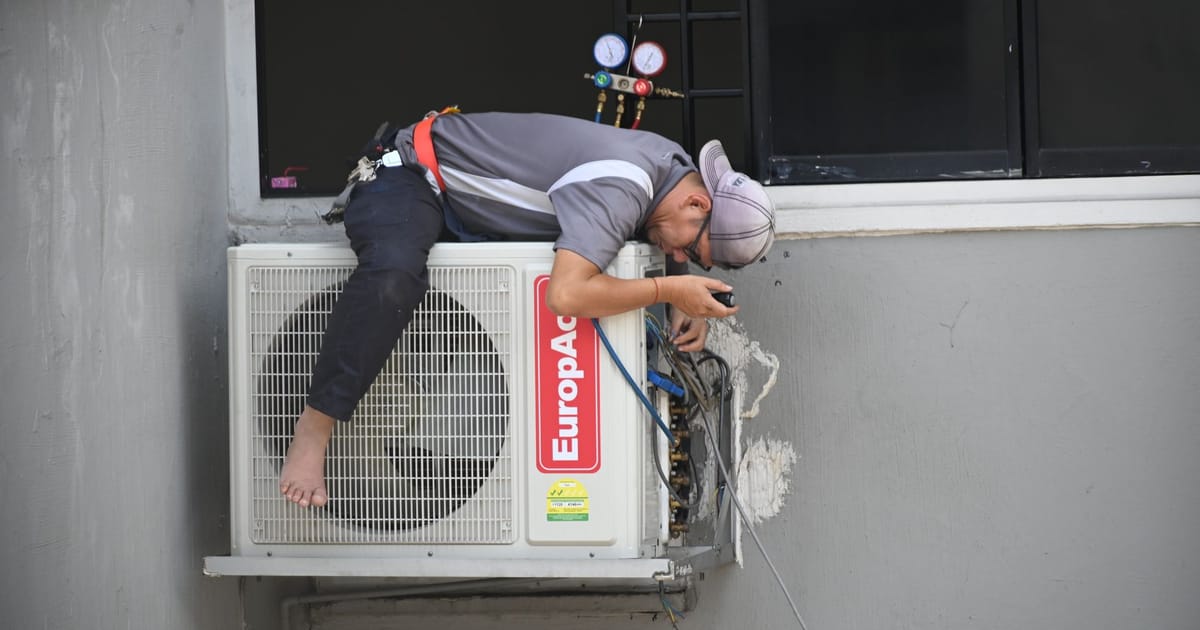
According to Angi cost data, homeowners typically pay between $5,000 and $12,500 to replace a central HVAC system, with the national average near $7,500 including equipment and installation. Replacing only an air conditioner condenser runs $3,500 to $7,600, and a furnace alone costs $2,500 to $6,000. What you pay depends on system type, home size, efficiency rating, ductwork condition, and regional labor rates. The sections below break down each cost driver.
What You Are Replacing Changes the Price Significantly
Not every HVAC replacement is a full system swap. Understanding what component you actually need to replace helps you evaluate quotes before a contractor ever sets foot in your home.
AC condenser only: The condenser is the outdoor unit that releases heat. Replacing it alone -- while keeping the existing air handler and ductwork -- typically costs $3,500 to $7,600 installed, according to Angi cost data. This option only makes sense when the air handler (indoor unit) is relatively new and compatible with current refrigerant standards. A mismatch between an old air handler and a new condenser can hurt efficiency and may require EPA-compliant refrigerant work.
Furnace only: A gas furnace replacement runs $2,500 to $6,000 installed on average, per Angi. High-efficiency condensing furnaces (AFUE 95% or higher) sit at the upper end of that range but qualify for the federal 25C tax credit, discussed below.
Heat pump (replaces both AC and heating): A heat pump handles both cooling and heating using refrigerant, making it the right choice when you want to eliminate a gas furnace or in climates where temperatures rarely fall below 15 to 20 degrees Fahrenheit for extended periods. The U.S. Department of Energy notes that heat pumps can deliver two to three times more energy in heat than they consume in electricity under the right conditions. Installed cost ranges from $5,500 to $10,500, according to Angi, with cold-climate models pushing higher.
Full split system (new AC condenser plus air handler): When both the outdoor and indoor units have failed or are incompatible, a full replacement is the standard recommendation. Angi places the typical installed range at $5,000 to $12,500. Matching components from the same manufacturer is standard practice and simplifies warranty claims.
Ductwork: Existing ductwork that is leaky, undersized, or damaged adds $1,500 to $5,000 to the total project cost, according to Angi. In homes with no existing ducts, a ductless mini-split system is often the more practical option and avoids that expense entirely.
Installed Cost by System Type
The table below summarizes typical installed ranges. Figures are drawn from Angi cost data and reflect U.S. national averages; costs in high-labor-cost metro areas (San Francisco, New York, Boston) often run 20 to 40 percent above these midpoints.
| System Type | Typical Installed Cost Range | Notes |
|---|---|---|
| AC condenser only | $3,500 -- $7,600 | Air handler must be compatible |
| Furnace only (gas) | $2,500 -- $6,000 | High-AFUE models at higher end |
| Heat pump (full system) | $5,500 -- $10,500 | Cold-climate models add cost |
| Full split system (AC + air handler) | $5,000 -- $12,500 | Most common full replacement |
| Ductless mini-split (single zone) | $3,000 -- $5,000 | Per zone; no ducts required |
| Duct replacement (existing system) | $1,500 -- $5,000 | Added to system cost above |
(Source: Angi cost data, est. figures represent U.S. national averages and vary by region.)
How System Size (Tonnage) Drives Equipment Cost
HVAC capacity is measured in tons of cooling -- one ton equals 12,000 BTUs per hour. A correctly sized system is critical to comfort, efficiency, and equipment lifespan.
The general rule of thumb is one ton per 400 to 600 square feet of conditioned space, but this is only a starting point. Climate zone, insulation quality, window area, ceiling height, and sun exposure all affect the actual load. The Air Conditioning Contractors of America (ACCA) requires a Manual J load calculation before sizing any replacement system. Ask every contractor whether they will perform one -- if they quote equipment size based solely on your home's square footage or on what the old system was, that is a warning sign.
Correct sizing beats oversizing every time
A larger system does not mean better cooling. An oversized unit reaches the set temperature too quickly, shuts off before completing a full humidity-removal cycle, and then restarts -- a pattern called short-cycling. Short-cycling increases wear on the compressor, raises energy bills, and leaves rooms feeling clammy. The ACCA's Manual J standard exists specifically to prevent this. Insist on a load calc from every contractor quoting a replacement.
Efficiency Ratings: SEER2 and AFUE Explained
Two efficiency metrics show up on every equipment quote. Understanding them before you shop helps you weigh upfront cost against long-term savings.
SEER2 (Seasonal Energy Efficiency Ratio 2) measures cooling efficiency. As of January 2023, the U.S. Department of Energy requires minimum SEER2 ratings of 13.4 for gas furnace systems in most of the U.S. and 14.3 in hotter southern states. High-efficiency units reach SEER2 18 to 22. Each step up in SEER2 typically adds $500 to $1,500 to equipment cost but reduces summer cooling bills. The DOE estimates that upgrading from a SEER 10 (older system) to SEER2 16 can cut cooling energy use by roughly 37 percent, though actual savings vary by climate and usage.
AFUE (Annual Fuel Utilization Efficiency) measures furnace heating efficiency. A standard unit converts about 80 percent of fuel to heat (AFUE 80). High-efficiency condensing furnaces reach AFUE 95 to 98.5, meaning nearly all combustion heat stays in the house. The premium for a high-efficiency furnace is typically $600 to $1,200 more than a standard model, per Angi cost data.
Higher efficiency ratings generally push you toward the upper end of cost ranges -- but they also improve the odds of qualifying for the federal tax credit described in the next section.
Rebates and the Federal 25C Tax Credit
Federal incentives can meaningfully offset the cost of a high-efficiency replacement. Two programs are relevant to most homeowners.
Inflation Reduction Act Section 25C credit: The IRS allows a nonrefundable tax credit equal to 30 percent of the cost of qualifying high-efficiency heating and cooling equipment, up to specific annual caps. For central AC units and gas furnaces, the annual cap is $600. For qualifying electric heat pumps, the cap is $2,000 per year. The credit is per year, not per lifetime -- if you replace your furnace one year and your heat pump the next, you can claim the applicable cap each year. Confirm equipment eligibility via the ENERGY STAR Certified Products database and verify your specific tax situation with a tax professional, since the credit's interaction with other credits and income varies.
Utility and state rebates: The Inflation Reduction Act also funds state-level High-Efficiency Electric Home Rebate Act (HEEHRA) programs, which in qualifying states provide point-of-sale rebates -- not just tax credits -- on heat pumps and related upgrades. Income limits apply. The ENERGY STAR Rebate Finder (energystar.gov/rebate-finder) is the most reliable way to find what is available by ZIP code.
Check rebates before selecting equipment
Before finalizing your equipment choice, run your ZIP code through the ENERGY STAR Rebate Finder and ask your utility company about heat pump or high-efficiency cooling rebates. Some utilities offer $200 to $1,000 in additional incentives that stack with the federal tax credit. Your contractor may also know of current utility promotions -- ask specifically.
Cost Bar Chart by System Type
Labor, Permits, and Other Project Costs
Equipment is only part of the bill. Labor and ancillary costs deserve a line-by-line review of any quote.
Labor: HVAC installation labor runs $1,000 to $3,500 for a standard residential replacement, per Angi cost data. Rates vary significantly by region, and installations requiring more complex refrigerant work, electrical panel changes, or new line sets push labor higher.
Permits: Most jurisdictions require a permit for HVAC replacement, and many require a city inspector to sign off before the system is commissioned. Permit fees range from $50 to $500 depending on municipality. HVAC work also intersects with EPA Section 608 regulations -- any technician handling refrigerant must hold an EPA 608 certification. Ask to see it. Work done without required permits can create problems when you sell the home or file an insurance claim. Read more about licensing requirements in our guide to Licensed vs Unlicensed Contractor: The Real Risks.
Refrigerant and line sets: If the existing refrigerant lines are compatible with the new system, contractors typically reuse them. Older systems using R-22 (phased out in 2020) require new line sets and may involve refrigerant recovery fees. New line sets add $200 to $1,000.
Thermostat: A compatible programmable or smart thermostat adds $100 to $350. Many high-efficiency systems require a communicating thermostat to realize their full efficiency benefits.
Refrigerant handling is EPA-regulated -- do not let an uncertified technician touch your system
Refrigerant release is a federal violation under the Clean Air Act. Only EPA Section 608-certified technicians may purchase and handle refrigerant. If a contractor quotes work on your refrigerant lines without mentioning certification, ask to see documentation before work starts. Uncertified refrigerant handling can void your equipment warranty and expose the homeowner to liability.
How to Get Useful Quotes and Avoid Overpaying
A single quote gives you no way to evaluate whether a price is fair. Getting at least three written, itemized quotes from licensed HVAC contractors is the standard recommendation for any project over $1,000 -- and a full system replacement is well above that threshold. Our guide on How to Get Accurate Contractor Quotes walks through exactly what to ask for in writing.
When comparing quotes, look beyond the total price. The equipment model number and SEER2/AFUE rating should be identical across quotes so you are comparing apples to apples. Labor, permit, line-set, and thermostat costs should be itemized separately. A quote that bundles everything into one number is harder to evaluate and can hide inflated margins on equipment.
Ask each contractor whether they will perform a Manual J load calculation before specifying equipment size. A contractor who skips this step is guessing, and an oversized or undersized system will cost you more in energy and repairs over its lifespan than the difference in installation quotes.
If your current system is approaching ten to fifteen years old but has not failed completely, it is worth understanding when replacement makes more financial sense than repair. Our guide to HVAC Repair vs Replacement: When to Replace covers the decision framework.
Get quotes from contractors who pull their own permits
Confirm that each contractor will pull the permit themselves, not hand it off to the homeowner. A contractor who asks you to pull your own permit is often trying to reduce their own paperwork burden and may not carry the appropriate license for permitted work in your jurisdiction. The permit should appear in the contractor's name.
What to Verify Before Signing
Before committing to any contractor for HVAC work, confirm three things: a valid state HVAC contractor license (look it up on your state licensing board's website, not just the business card), current general liability insurance and workers' compensation coverage (ask for certificates, not verbal assurances), and EPA Section 608 certification for any technician handling refrigerant.
HVAC replacement involves electrical connections, refrigerant handling, and in many cases gas line work. All three carry licensing requirements enforced by state and local codes. This is not a trade where saving a few hundred dollars on an unlicensed contractor is a reasonable risk -- a botched installation can void the manufacturer's warranty, fail inspection, and in the case of gas line errors, create a safety hazard.
Get the final scope of work, equipment model numbers, warranty terms (equipment and labor separately), and permit responsibility in writing before any work begins.
Frequently asked questions
How much does a full HVAC system replacement cost?
According to Angi cost data, most homeowners pay between $5,000 and $12,500 for a full split-system replacement, including equipment and labor. The wide range reflects differences in home size, efficiency rating chosen, regional labor rates, and whether existing ductwork needs repair or replacement.
Is a heat pump cheaper than a traditional AC and furnace?
The installed cost of a heat pump is often comparable to a split AC-plus-furnace system -- typically $5,500 to $10,500 according to Angi -- but heat pumps can reduce annual heating energy costs significantly in mild to moderate climates, per the U.S. Department of Energy. Your payback period depends on local electricity versus gas rates.
What is a Manual J load calculation and why does it matter?
A Manual J is the industry-standard heat-gain and heat-loss analysis used to determine the correct HVAC size for a specific home. The ACCA requires it before sizing a new system. An oversized unit short-cycles, wears out faster, and leaves humidity problems. A licensed contractor should perform one before quoting equipment.
What federal tax credit can I claim for a new HVAC system?
The Inflation Reduction Act Section 25C credit covers up to 30% of the cost of qualifying high-efficiency systems, capped at $600 per year for central AC or furnaces and up to $2,000 per year for qualifying heat pumps. The annual cap resets each tax year. Confirm current eligibility on the IRS website or with a tax professional.
How do I know if my ductwork needs replacement?
Signs include rooms that are consistently too hot or cold, visible gaps or disconnected sections in accessible ductwork, musty odors, and energy bills that seem high relative to your system size. A licensed HVAC technician can perform a duct-leakage test. Duct replacement typically adds $1,500 to $5,000 to a project, per Angi cost data.